Introduction
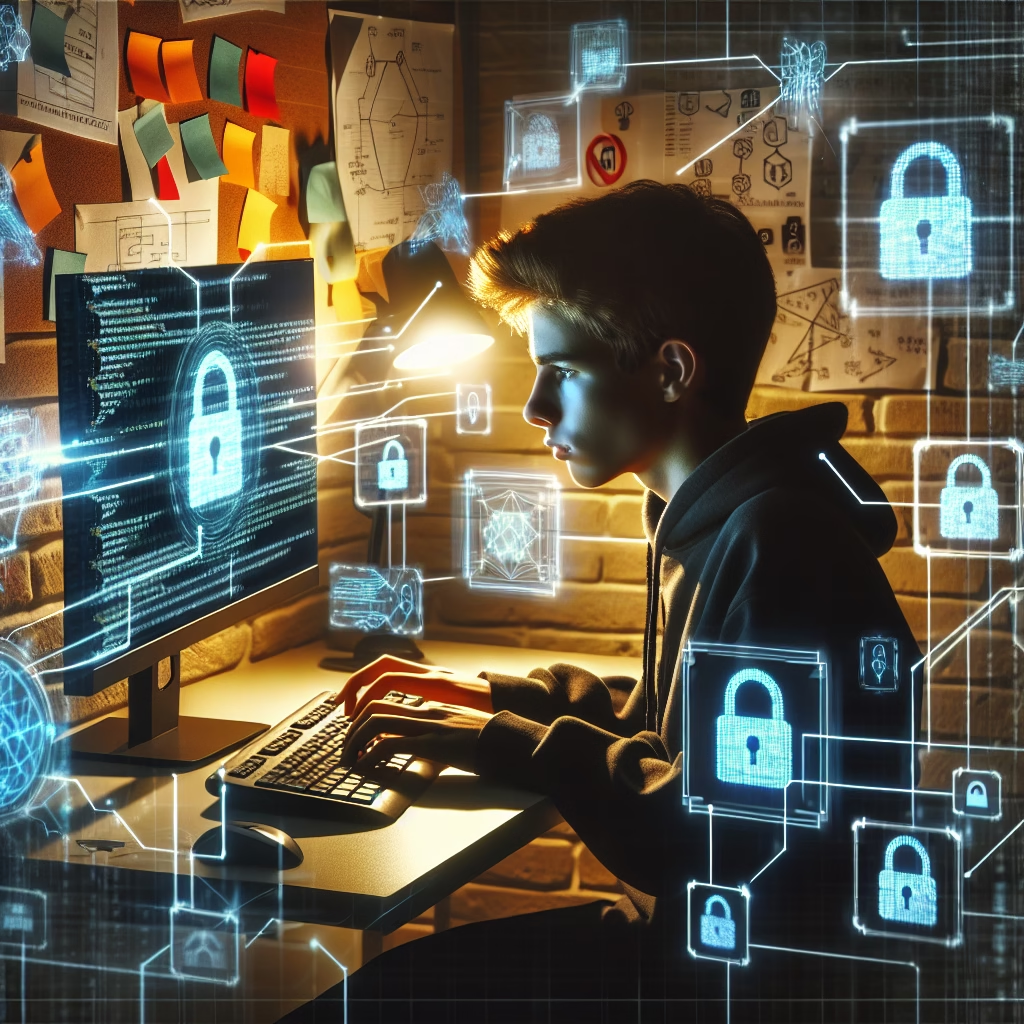
In the last decade, a new generation of digital natives—teenagers who’ve grown up surrounded by smartphones, social media and cloud services—has begun to dominate the cybersecurity landscape. No longer passive consumers, these tech-savvy youths are turning into young hackers, launching sophisticated attacks and discovering zero-day vulnerabilities. This surge in juvenile cybercrime trends poses significant risks for businesses, schools and government agencies. In this article, we’ll explore why teenagers excel at hacking, highlight key cybercrime trends among youth, and share practical steps you can take (including leveraging PhishDef) to protect your organization.
The Rise of Digital Natives Turned Hackers
“Digital natives” is a term coined by education consultant Marc Prensky to describe individuals born after 1980 who have never known life without the Internet. These teens:
- Learn complex software tools intuitively
- Share techniques instantly via online forums and social media
- Have unprecedented access to online learning resources (YouTube tutorials, GitHub repos)
According to the Wikipedia page on digital natives, this cohort’s comfort with technology equips them to navigate system architectures and coding languages faster than previous generations.
Why Teenagers Excel in Hacking
1. Deep Technical Fluency
By age 13, many teens have already learned multiple programming languages—Python, JavaScript, even Rust—from free online platforms like Codecademy and freeCodeCamp. This technical fluency shortens the learning curve for building exploits, automating attacks and customizing malware.
2. Ready Access to Resources
Open-source communities and “leak” sites provide tools such as:
- Packet sniffers (Wireshark)
- Exploitation frameworks (Metasploit, Cobalt Strike)
- Phishing kits on the Dark Web
Combined with cloud computing credits (AWS Educate, Google Cloud student accounts), these resources allow teens to launch powerful attacks from home with minimal investment.
3. Advanced Social Engineering Skills
Growing up on social media, teens master persuasion tactics and online personas. According to a Forbes report, social engineering accounts for over 35% of breaches. Young hackers exploit:
- Ingratiation and authority biases
- Tailored spear-phishing emails
- Voice phishing (vishing) via phone and VoIP
4. Motivations and Challenges
- Boredom and thrill-seeking: A 2023 FBI IC3 report noted a 28% increase in juvenile hacking complaints.
- Desire for recognition: Underground forums like HackForums reward kudos and social status.
- Monetary gain: Bug bounty payouts grew to $9.4 billion worldwide in 2022, per HackerOne data.
- Legal blind spots: Many jurisdictions treat teen hackers leniently, reducing deterrents.
Cybercrime Trends Among Youth
Rising Attack Vectors
- Phishing and Business Email Compromise (BEC): Teens automate spear-phishing campaigns.
- DDoS Attacks: Mirai-style botnets rented for under $20/day.
- Cryptojacking: Injecting scripts to mine cryptocurrency on infected machines.
Preferred Platforms and Tools
- Encrypted chat apps (Discord, Telegram) for command-and-control conversations
- Dark web marketplaces offering stolen credentials
- Freemium “stresser” services that double as DDoS-for-hire tools
Real-World Examples
Example 1: The Mirai Botnet Teen Developer
In 2016, a 17-year-old in Kansas created the Mirai malware, which infected 600,000 IoT devices and launched record-breaking DDoS attacks on major websites. Though initially estimated as a prank, the incident caused over $500 million in damages.
Example 2: High Schooler Earning Six Figures in Bug Bounties
A 16-year-old from California reported critical vulnerabilities in a Fortune 500 company and earned $50,000 in one disclosure alone. His success sparked debates over whether to employ or prosecute top young researchers.
What It Means for Businesses and Consumers
The rise of teen hackers signals a dual challenge:
- Increased frequency of sophisticated attacks
- Greater difficulty tracing perpetrators due to anonymizing tools
Organizations must enhance their security posture. Simple perimeter defenses are no longer enough. Phishing protection, real-time threat intelligence and employee training become critical. That’s where solutions like PhishDef offer an edge—by automating detection of spear-phishing, flagging suspicious links and providing actionable alerts.
Actionable Steps to Mitigate Teen Hacker Threats
1. Develop a Cybersecurity-Aware Culture
- Conduct quarterly phishing simulations and measure click rates.
- Offer interactive training on social engineering pitfalls.
- Reward employees who report suspicious messages.
2. Deploy Advanced Anti-Phishing Tools
Implement a layered defense:
- Content filtering at the gateway
- Domain-based Message Authentication, Reporting & Conformance (DMARC)
- AI-driven link analysis (e.g., PhishDef’s real-time link scanner)
3. Enforce Strong Authentication
- Mandate multi-factor authentication (MFA) on all critical systems.
- Use hardware tokens or mobile authenticators.
- Regularly review privileged access lists.
4. Monitor and Respond
Set up security operations center (SOC) alerts for anomalous behavior:
- Unusual login times or geographies
- Multiple failed login attempts
- Outbound data spikes
Integrate PhishDef’s dashboard to centralize threat intelligence and automate incident workflows.
Key Takeaways
- Teenagers are emerging as top-tier hackers due to their native tech fluency and access to open-source tools.
- Youth-driven cybercrime trends include DDoS, phishing and cryptojacking—often coordinated via encrypted platforms.
- Businesses must adopt a multi-layered security strategy: training, anti-phishing technology and robust authentication.
- PhishDef provides real-time link analysis and threat detection, helping you stay ahead of young hackers.
Call to Action
Don’t let the next wave of teenage hackers catch you off guard. Strengthen your defenses today with PhishDef’s industry-leading phishing protection. Request a free demo and see how easy it is to safeguard your organization against emerging cybercrime trends.